
Smarter construction starts with measuring
Comfortica collects data for a more sustainable construction sector through EU project Reincarnate
Building automation is no longer just about convenience and comfort. Smart technology can also help us better understand and monitor buildings and, ultimately, make them more sustainable. With this in mind, Comfortica is taking part in Reincarnate, the second European innovation project in which the building automation specialist is involved.
As part of Reincarnate, 16 partners are working together over a 48-month period on various projects across Europe and beyond. Using innovative technologies, the project explores how buildings, materials and construction products can be used for longer and how the construction sector can become more sustainable.
Why is Comfortica taking part in the EU project Reincarnate?
Building automation is often associated with lights that switch on automatically or heating that can be controlled via your smartphone. But smart building technology can do much more. Kariem Makhlouf, owner of Comfortica, explains: “By collecting, connecting and unlocking data from a building, we can gain a better understanding of how buildings perform and monitor their condition. These insights can then contribute to more sustainable buildings. This makes smart technology an interesting solution for the future of the construction sector.”
For this reason, Comfortica previously joined the EU project INBLANC, which focuses on making existing and future buildings more energy-efficient, sustainable and healthy. “Reincarnate is a natural extension of that work. Technology also plays an important role in making the built environment more sustainable within this project.”
The aim of EU project Reincarnate
The main aim of the EU project Reincarnate is to promote a circular economy within the European construction sector. At its heart is the ambition to extend the lifespan of buildings, materials and construction products.
Key objectives include:
- Reducing waste: significantly reducing construction and demolition waste by giving materials a second life.
- Reducing CO₂ emissions: cutting greenhouse gas emissions from the construction sector.
Maintaining quality: ensuring that materials retain sufficient quality after disassembly for them to be used in a new application. - Using smart technology: developing a digital platform using artificial intelligence (AI), robotics and digital twins to monitor the condition and reusability of materials.
Comfortica’s role in the EU project Reincarnate
Within the Reincarnate project, Comfortica was responsible for implementing a measurement and data collection system in Menden, Germany. Various sensors have been installed at 3L Architekten.
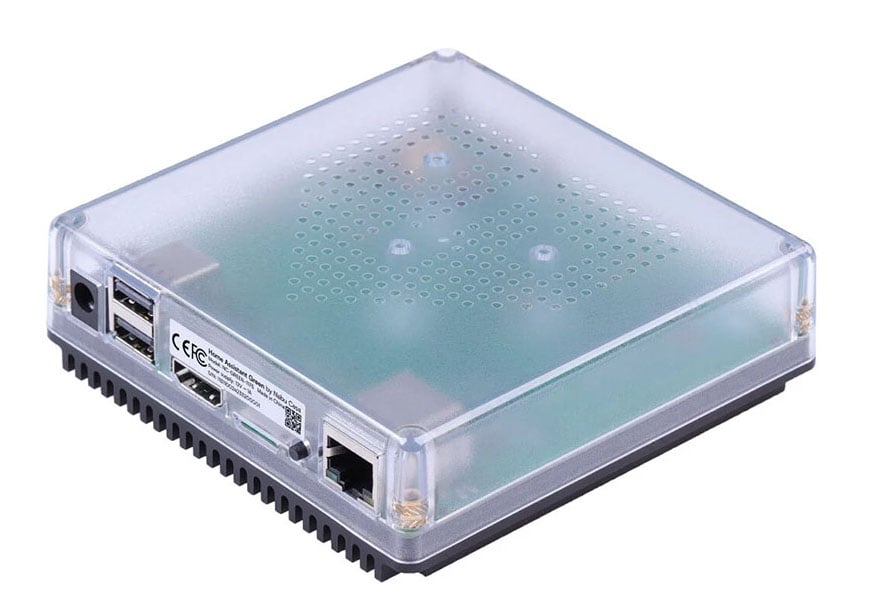
Kariem explains: “These sensors continuously collect information about the conditions inside and around the building, as well as the condition of specific structural elements. A Moxa Modbus Gateway collects all this data and sends it to the Mainflux cloud platform. The data can then be stored and analysed further.”
The sensors measure, among other things:
- wind direction
- wind speed
- surface temperature of façade elements
- structural vibrations
- indoor and outdoor humidity
- air pressure
- solar radiation
- ultraviolet radiation (UV-A and UV-B)
- carbon dioxide (CO₂)
- concentration of volatile organic compounds (VOCs)
- mechanical strain and deformation of a structural element
Combining these measurements provides an increasingly comprehensive picture of the conditions surrounding a building and how the building and its structure behave over time.
Cross-border collaboration
A European innovation project is, of course, about more than technology. Collaboration between organisations and countries is an important part of Reincarnate.
“The collaboration with the different partners has been very positive,” says Kariem. “We are working with organisations in countries including Germany and Serbia. Everyone contributes knowledge based on their own area of expertise. It is precisely this combination of different expertise and perspectives that makes a European project like this so valuable.”
Reincarnate’s pilots around the world
As part of Reincarnate, concrete applications relating to circular construction and the reuse of materials are being developed and tested at various locations. The pilot projects include:
- Berlin, Germany: including a tiny house made with reused materials, research into timber roof structures and AI-based detection of cracks in masonry.
- Paris, France: circular decision-making for real estate.
- Heerde, the Netherlands: tracking prefabricated construction elements using building information modelling (BIM).
- Gothenburg, Sweden: research into circular material flows and raw materials.
- Teknikhöjden, Stockholm, Sweden: circular material flows for flat glass and mapping a materials bank.
- Wuhan, China: applying circular solutions to a high-rise construction project.
What does participation in Reincarnate mean for Comfortica’s customers?
So, what does taking part in a European innovation project such as Reincarnate ultimately mean for Comfortica’s customers? “Just as with INBLANC, our participation in this project creates a lot of value for both us and our customers,” Kariem explains. “By working with European knowledge institutions, companies and other experts, we gain access to the latest knowledge and technologies. We can then apply the knowledge and experience we gain through these projects directly to our customer projects.”
In this way, Comfortica is not only contributing to European innovation, but also bringing that knowledge back into everyday practice.
Would you like to know more about how Comfortica contributes to innovative solutions for the construction sector and energy challenges at European level? Explore the EU project Reincarnate and discover what has been developed through this international collaboration on the project website.
Contributing to a more sustainable world? Comfortica makes it possible!