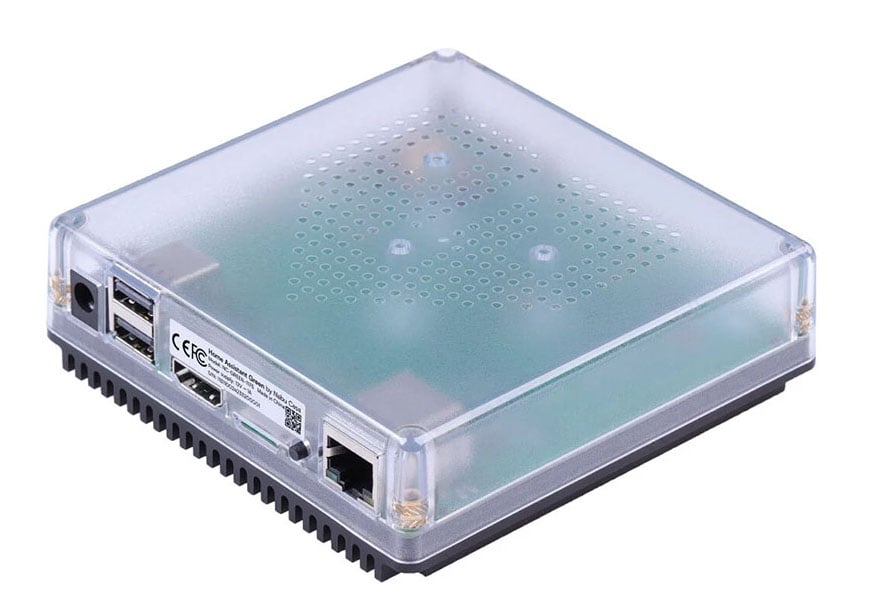

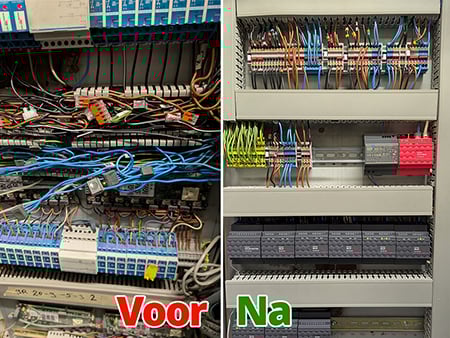
‘My house is haunted’, said our client. After 20 years, our client’s Crestron/Lutron home automation system was clearly due for replacement. But how do you go about replacing an old system and installing a new one? What does that involve? In this blog post, you’ll learn what to consider when replacing your home automation system, the benefits of an open-source system, and how Comfortica tackled this project.
Why replace an home automation system
The lights were turning on and off on their own, and half of the home automation functions stopped working. Those ghost lights were quite amusing during Halloween, but in everyday life it became incredibly annoying that the once state-of-the-art Crestron/Lutron home automation system started to decide for itself when and how it would work. Furthermore, the system could only be controlled with wall panels, not via an app like modern systems. It also had considerably fewer options than modern home automation systems because processing power was considerably less powerful back then. Integrating new electronics was also difficult, if not impossible.
The client wanted more flexibility, ease of use, and future-proof reliability in their new home automation system. In addition, it was important that the existing cabling could be reused and that the new system could be expanded with Z-Wave, to accommodate a potential future extension. Crestron proved less attractive from a cost perspective and, as a closed system, offered limited options for future expansion. This led to the choice for the Grenton home automation system.
Challenges replacing home automation system
When replacing a home automation system, Comfortica first takes inventory of the current system and discusses the customer’s needs and wishes with them. This on-site assessment can take up to 2-3 days, depending on how well (or not 😉) the old system is documented.
Taking inventory turned out to be quite a challenge with this project since nothing was documented, the build-up of the Creston/Lutron system wasn’t been written down and connections were made where they were not allowed, had no function or just simply didn’t make sense. As a result it took several days to find out how the technical part was set up.
Why an open-source sytem?
Step by step, we thoroughly inventoried everything the client had, as well as what they were actually using. Next we worked together to determine which solutions would best suit the client.
The advantage of Grenton’s new open-source home automation system is that you’re not limited by the manufacturer’s capabilities when expanding the system. When something new comes to market, it can easily take two and a half years for a manufacturer to add this functionality to their own system. This significantly reduces your flexibility. With open-source technology, you can much more easily expand your home automation system or adapt it in the future, integrating it with new technologies like AI or, for example, a new type of air conditioning system.
Result client with new Grenton home automation system
We transferred all existing functionality to the new Grenton home automation system, eliminating some unused features. We also programmed new scenarios relevant to the client, such as a dinner scene where the curtains and lights automatically adjust to a specific setting.
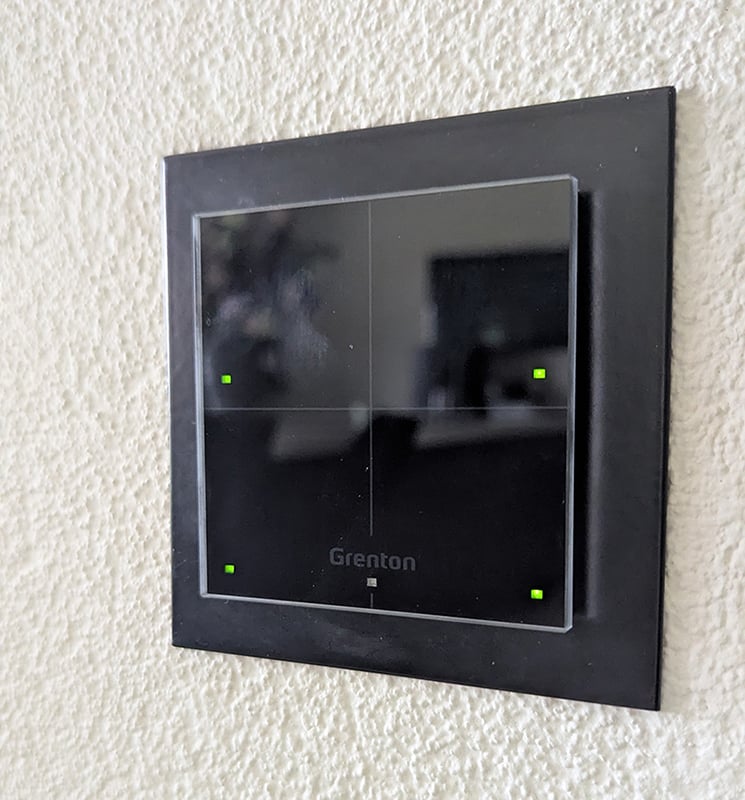
Grenton smart home square wall panel
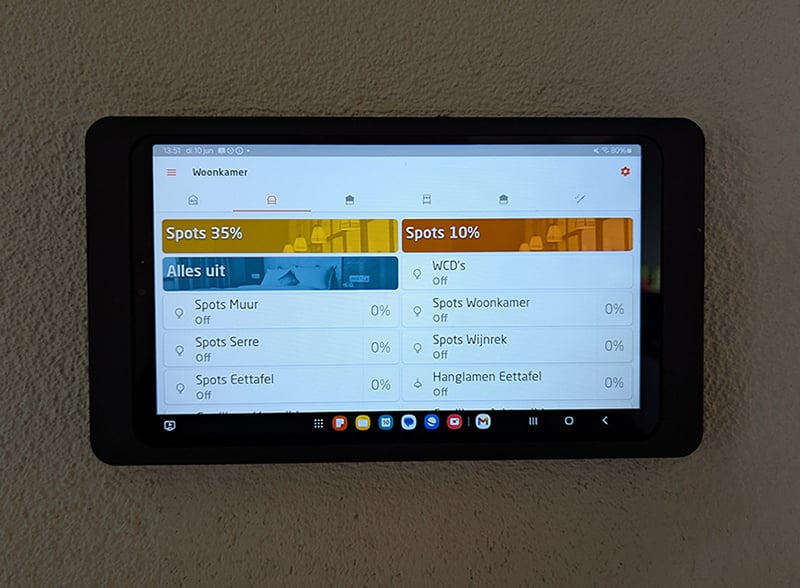
A particularly special aspect of this project is that we installed new wall panels, designed by the client, and the tablets have a custom-designed interface. Of course, Grenton’s new digital home automation system can now also be controlled via a smartphone app.
In summary, we took care of:
- Control lighting
- Control curtains
- Integrated security alarm
- Tablets with custom-designed interface
- Heaters connected
- Special wall panels, designed by client
- Tidying up cables
The end result: a future-proof, flexible system that is user-friendly, tailored to the client’s daily routines and prepared for new innovations. See all project photo’s here.
Tips when replacing and purchasing a new home automation system
Ready for a new home automation system? Here are some practical tips to consider:
- Hire an expert – Kariem: ‘People often invite their old electrician back. But for home automation these days, you really need an expert. The old one might not be the expert they need.”
- Future aspirations – Think carefully about what you want. Not just now, but also in the future. After all, you want to be sure you choose the right system that can also integrate new functionality.
- Flexibility – Want the guarantee of a flexible home automation system? Choose an open-source home automation system.
- Customization – Choose a partner who thinks with you and delivers customization (like Comfortica 😉).
Duration of work
How long does it take to replace an old home automation system and install a new one? This depends on what we find during the inventory. But as a general rule, you can take the following schedule into account:
- Inventory – 2 to 3 days on-site for inventory of the current system and future needs.
- Installation – 1 week on-site.
- Experience – After installation we let the client ‘”live” with the new system a few days to a week, so the client can truly experience it, but also see what perhaps needs adjustment or is missing.
- Fine tuning – After which the system is remotely fine-tuned to the client’s wished where necessary.
Ready for a smart home automation system where all your smart features – from lighting to climate control – work seamlessly together and fully meet your needs and wishes? With the flexibility to easily add new features or devices in the future? Comfortica makes it possible.
Contact Comfortica today to discuss your wishes and possibilities.